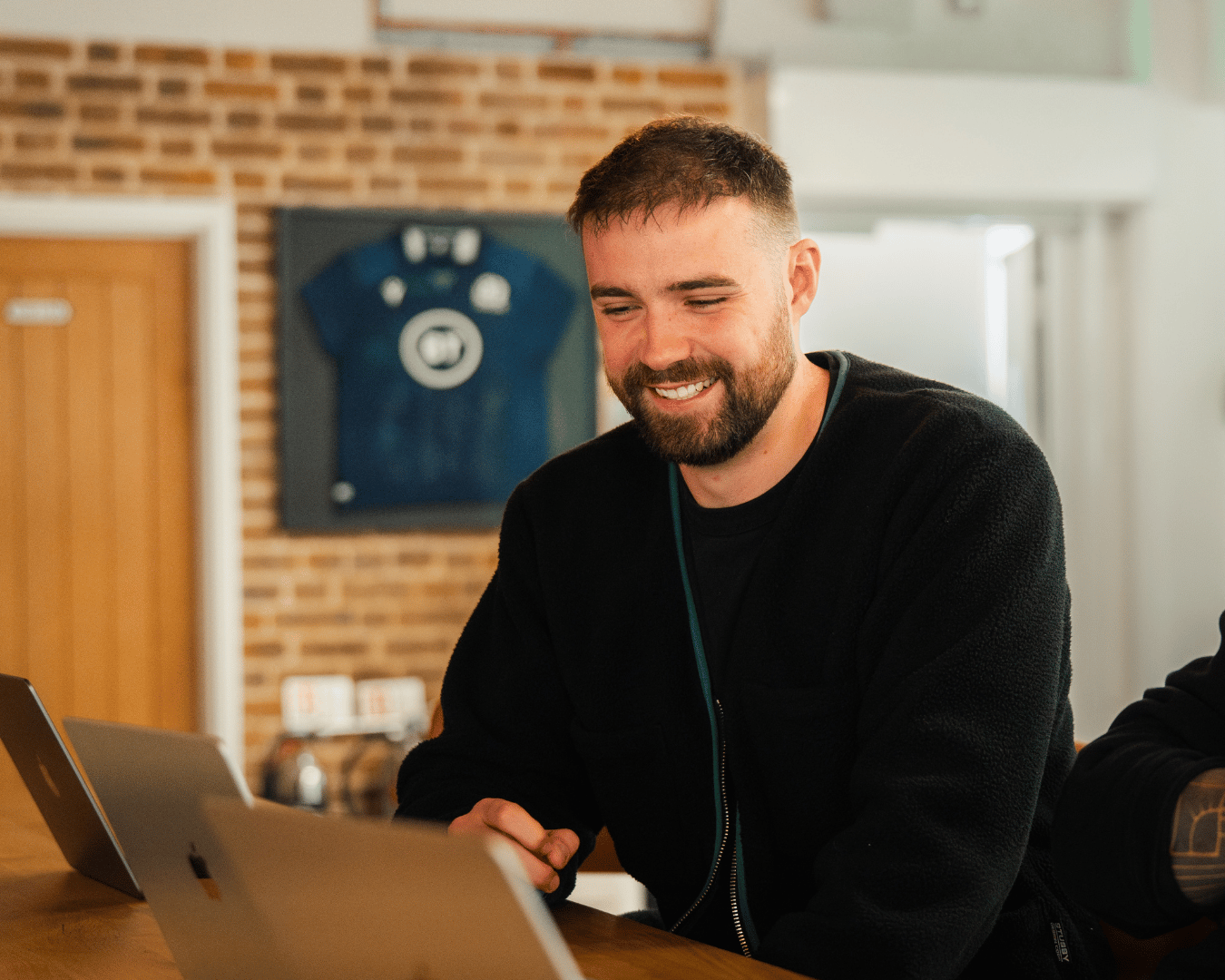
Most companies are only just waking up to the power of employee advocacy. Tavis Coleman saw it coming years ago.
In 2019, before everyone was talking about it, he spotted something changing. There were no glossy tools, not much budget, and certainly no blueprint. What he did have was a hunch that connecting people with content, and each other, could be done in a smarter way.
Today, Tavis is Senior Social Media & Marketing Officer at Mott MacDonald. He now leads a thriving employee advocacy programme with over 750 active advocates and plans to grow that number to 3,000 by the end of next year.
And it didn’t start with strategy decks or software demos.
Starting with what you’ve got
Rather than wait for buy-in or budget, Tavis started small. The first version of the programme lived on a SharePoint site, supported by an organic tracking system and a very manual approach.
“For almost a year, we ran it manually. That gave us the data to prove it was worth investing in. More importantly, it helped us build the culture before we brought in the tech.”
This step is where many organisations go wrong when they rush into purchasing platforms, expecting the tool to do the work. At Mott MacDonald, the programme evolved from the ground up, driven by the needs of recruiters, the curiosity of technical specialists, and the appetite of leaders who wanted to spotlight their teams.
By capturing early traction and tracking results, Tavis was able to make a strong, data-led business case—one that senior leaders could get behind.
Individual voices, not corporate echoes
When it comes to advocacy, one of the most common downfalls is treating it like broadcast media: everyone sharing the same post, at the same time, in the same voice.
Tavis approaches this differently.
“When that happens, it looks fake. The best advocacy is personal. It should sound like the individual, not the company,”
From the start, he’s prioritised support over control. That means giving employees the tools and guidance to post in a way that feels natural, but still aligns with business goals. Some use advocacy to build their personal brand and others use it to strengthen client relationships or share sector insights. All of it contributes to the same goal: stronger visibility and reputation for the business.
Rethinking distribution
Tavis speaks about advocacy the way a marketer talks about media channels. To him, it’s a distribution strategy rather than solely a culture initiative.
“If your employees have built networks in their sectors, that’s a ready-made audience. You don’t have to pay for targeting, because you’re already reaching the right people.”
At Mott MacDonald, advocacy isn’t a side hustle. It’s a low-cost, high-impact way to get the right messages to the right people. And unlike sponsored content, it comes with built-in trust.
That impact is measured, too. From the early manual phase, Tavis tracked:
Hashtags
Share of voice on LinkedIn
Post performance
Audience growth.
With a platform now in place, those metrics are more visible than ever, but the foundation was laid early on, with careful tracking and a clear view of what good looked like.
Supporting the people behind the posts
Confidence doesn’t always come naturally when it comes to social media, especially in industries that aren’t traditionally online-first. Tavis knows that well.
“We don’t just talk about the company. We talk about the person’s take. That’s where the value is.”
The programme sits within Mott MacDonald’s employee engagement team, and that’s deliberate. It reflects the idea that advocacy isn’t about pushing branded content; it’s about creating a space for employees to share their stories.
To keep things fresh and responsive, Tavis runs quarterly coaching sessions under the banner of “Accelerating Advocacy”. Each one is shaped by feedback from the advocates themselves, with sessions covering everything from tone of voice to network growth.
While the programme is entirely voluntary, the appetite has never been an issue. For many, it’s a chance to grow professionally, connect with their network in a more meaningful way, and share work they’re proud of.
Advice for anyone starting from scratch
Tavis is clear: don’t lead with technology.
“Skip the platform, at least at first. Start small. Track what works. Use that data to build your case.”
That early stage — where everything is manual — helps you learn what actually motivates people to share. It also forces you to focus on culture and behaviours, rather than expecting the tool to fix everything.
Even as the programme scales, coaching remains central. People don’t want to be told what to post. They want to be supported, encouraged and shown how to use their voice in a way that feels meaningful.
“If you want people to share great stories, you need to help them find their voice,”
Why it matters now
We’re in a moment where trust is everything, and attention is hard-won. People scroll past generic branded content in seconds, but when they see a real story from someone they know or respect, they stop and listen.
That’s where employee advocacy comes in.
At its best, advocacy doesn’t just amplify your brand:
It builds credibility
It showcases your people.
It helps you reach audiences you might never have captured through traditional marketing.
That’s what Tavis has built, and why his work is resonating across the business.
Because when advocacy feels human, people lean in.