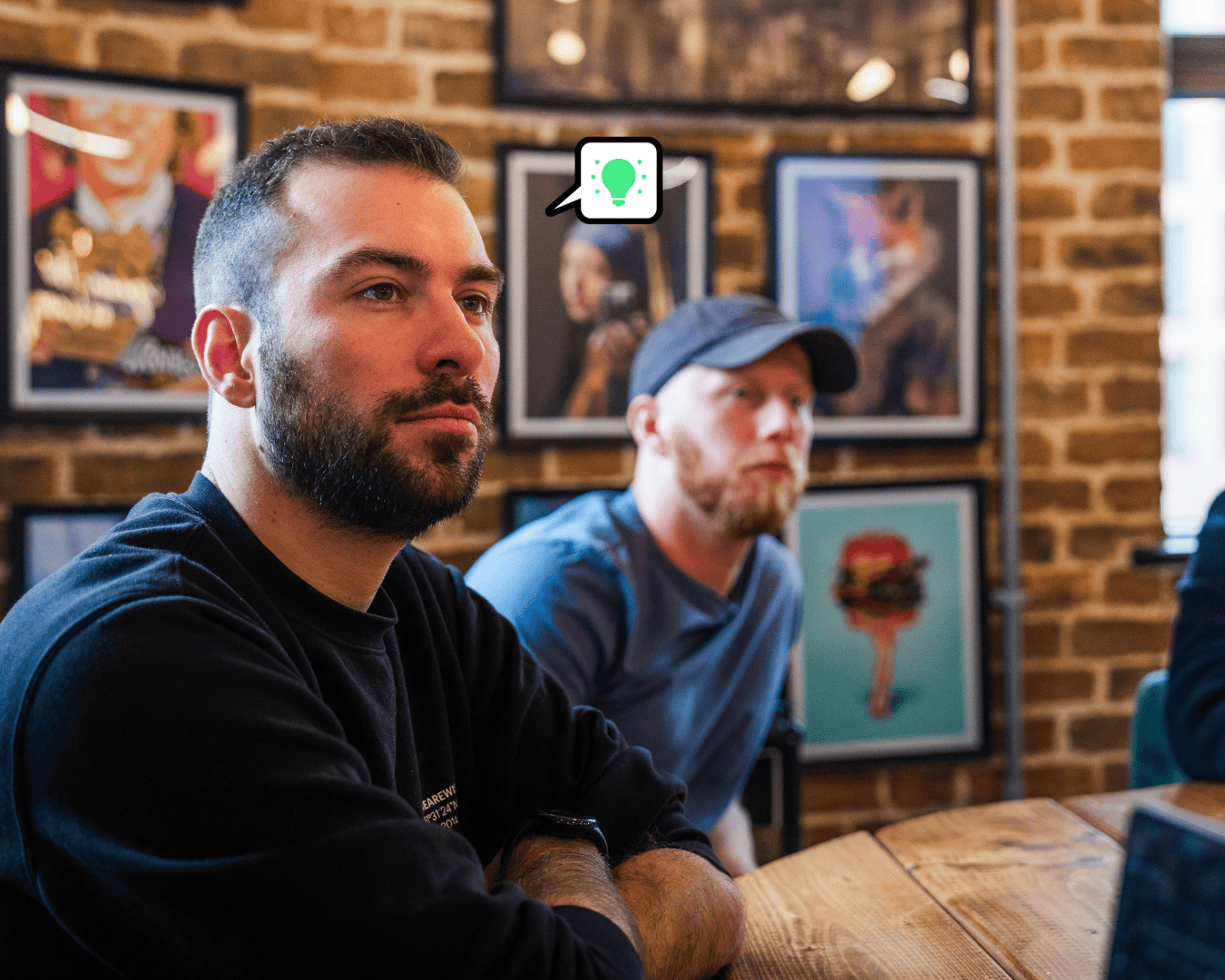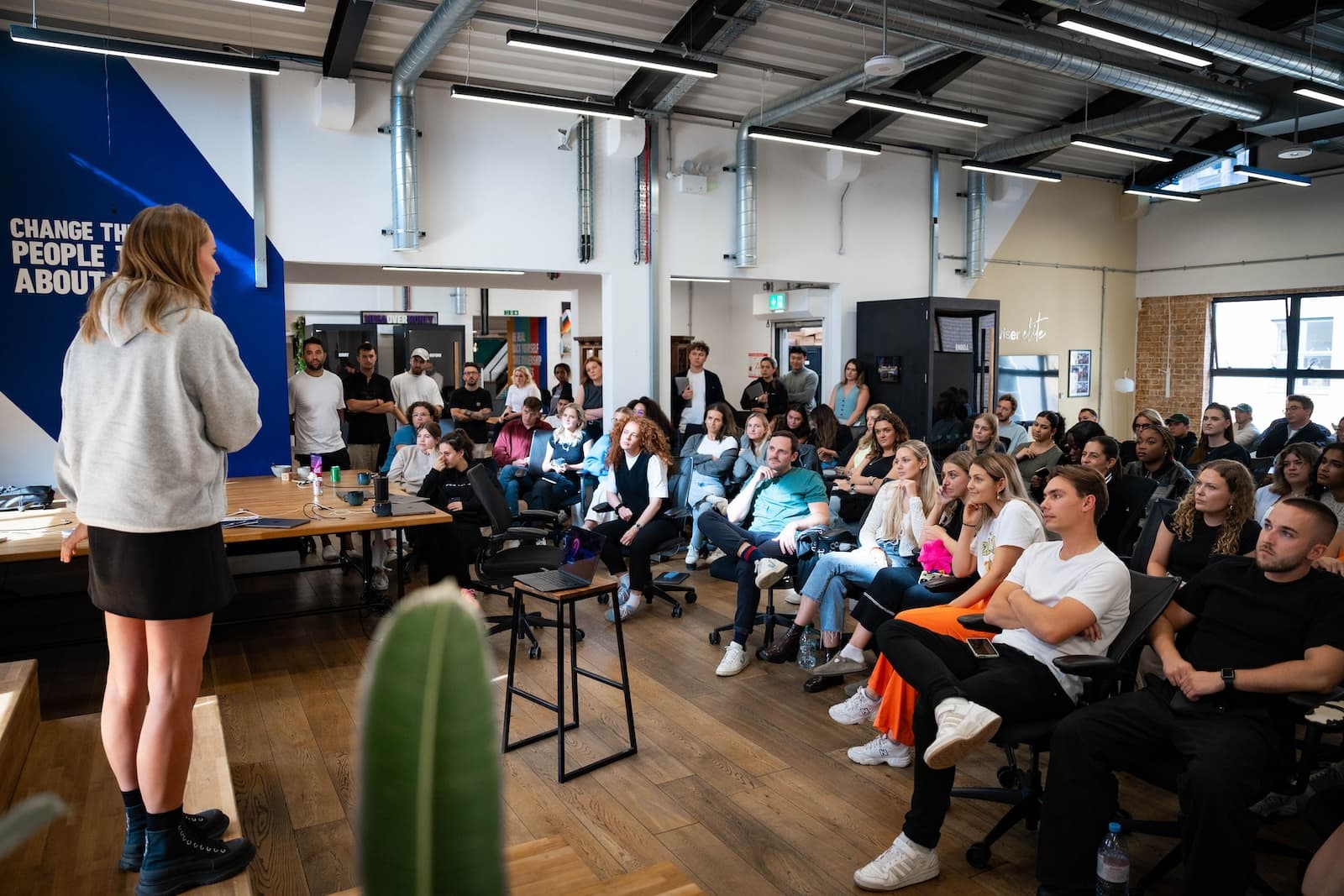
We hosted our latest breakfast roundtable with Seenit. The theme was employee advocacy and, specifically, the role leadership visibility plays in making it work.
The same tension kept surfacing…
Everyone agrees that employee voices matter, but without leadership showing up, advocacy either drifts or stalls.
We aren’t telling you that leaders need to become content creators, but when they're invisible, it sends a message, whether they intend it to or not.
The gap between junior energy and senior silence
The most active voices on social tend to be more junior; they're keen and comfortable on the platforms, which is great for reach and relatability, but there's a disconnect as those voices are often unanchored to the company's strategic direction.
The reasons why tend to be similar across businesses: time, fear of saying the wrong thing, not seeing the ROI, generational discomfort with social platforms, and the very real worry that being visible during tough times can look tone-deaf or self-serving.
"Our leaders don't see the relationship between business performance and employees speaking to an external audience."
And when business performance is under pressure, which it is for most organisations right now, the instinct is to retreat, pull back the content and wait it out.
92% of candidates research your CEO before they trust your company. If there's nothing there, employees read leadership absence as either a lack of transparency or a signal that talking about the company isn't safe. And the people who were thinking about posting? They stop.
Commenting is a superpower (and a smarter starting point than creating)
One of the most practical insights from the session was this: leaders don't have to create content to be visible; they just have to show up in other people's.
One attendee shared how their COO regularly comments on colleagues' posts on LinkedIn, Teams and the company intranet, and it comes across as incredibly genuine.
Several people said it would be their first move when they got back to the office, and the data supports it. You often get more impressions from a thoughtful comment than from a reshare. For leaders, this is a much lower barrier to entry. A "welcome to the team" on a new joiner's post. Or a congratulations comment on a milestone; it can go a long way.
It also creates a permission loop: when a senior leader visibly engages with employee content, it signals that this kind of visibility is encouraged.
Wiser advice: Don't wait for leaders to start posting; ask them to start commenting. It's lower risk, lower effort, and it builds the muscle for everything that comes after.
Know your leader before you brief them
The biggest mistake that can be made when creating content with leadership is jumping straight to "can you film a quick video?" without understanding what that person is actually comfortable with.
One guest told us about the hour-long discovery process they'd used with a senior leader, covering who she is as a person, who she is as a leader, what she wants employees to say about her when she's not in the room, the words and phrases she naturally uses, and critically, what's off-limits. That conversation turned into a one-page "how I show up" document.
This matters because not every leader is the same. Some are natural on camera, while others would rather write a message.
Wiser advice: Before you create anything, run a short discovery session. Topics, tone, format, boundaries. It can help avoid all the back and forth, and you can produce content that actually sounds like the person it's supposed to come from.
Permission flows in both directions
There's a common assumption that advocacy is top-down: leaders model visibility, employees follow, and there's truth to that. But in reality, permission also flows upward.
When employees post authentic content and it gets genuine engagement, that becomes evidence for leadership that visibility is worth it. But here's the tension: people reflected on how leaders showed up completely differently during COVID. Unscripted videos from kitchens, personal updates, and real vulnerability. It built enormous trust, and then it stopped.
"There were two versions of him as CEO. The one during COVID who was personable and caring, and the one after who became very distant, and everyone noticed."
Advocacy can't be a crisis response that gets switched off when things stabilise. It needs momentum in both directions, leaders modelling visibility, employees creating proof points, and someone in the middle connecting the two so neither side stalls.
Wiser advice: Track even the rough metrics. Engagement rates, organic reach comparisons, and qualitative feedback. You need proof points to build the internal case, and you need them to keep leadership engaged once they've started.
Key takeaways
What came through most clearly is that the content itself isn't really the hard part; it's everything around it.
The confidence, the sign-off, knowing what's safe to say. Everyone in the room was at a different stage, from teams with no programme at all to those rebuilding after one got shut down, but the same threads kept surfacing: you can't skip the step of understanding what each leader is actually comfortable with.
Start with commenting, run discovery before content, push beyond safe culture posts, and track even rough proof points to build the case. The companies making progress are the ones treating their leaders as individuals first and creators second.
Stay ahead in employer branding
From talent attraction trends to real employer brand challenges, Wise Words brings together practical insights, expert perspectives, and ideas you can actually apply.